Once the wire component is bent, welded and matched to the design, there’s one more decision to make: how to protect and finish it.
At Salpark, we also handle this stage – so that you receive a finished component that’s corrosion-resistant, durable and visually refined.
Depending on the element’s purpose, working environment and visual expectations, we offer one of three finishing solutions:
There’s no single formula – sometimes we powder coat raw wire components, sometimes we galvanise parts even when the base material is already zinc-coated, and in other cases we use passivation to improve surface durability and appearance.
It all depends on the project and on how the finished product needs to perform once it leaves our workshop.
The choice of protective method depends on the function of the component.
For some products, zinc-coated material used during wire production is sufficient.
In other cases – especially when aesthetics, chemical resistance or harsh working environments are key – we apply additional surface protection.
At Salpark, we use three types of final surface finishing:
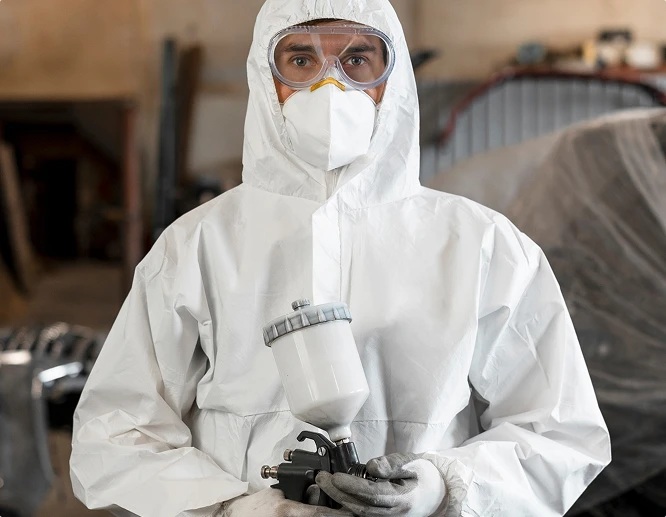
We apply a durable, damage-resistant powder coating in any colour from the RAL palette.
It’s an ideal solution when the component is visible, requires an aesthetic appearance and needs protection from atmospheric or chemical factors.
The coating is uniform, smooth and resistant to chipping.
We use galvanising for projects requiring enhanced corrosion resistance.
This applies to components intended for outdoor use, humid environments or where they’re exposed to water, heat or chemical agents.
We also galvanise components made from pre-galvanised wire when clients need a complete, uniform finish on the final product.
This process increases the corrosion resistance of stainless steel components.
It involves chemically cleaning the surface and forming a durable chromium oxide layer that protects the material from external factors.
At Salpark, we can perform electrochemical passivation supported by ultrasound – particularly effective for weld areas.
This method is especially recommended for industries requiring high hygiene and durability standards, such as food processing, pharmaceuticals or household appliances.
Every project begins with an assessment of its application and working environment – that’s why we always recommend the best finishing method, tailored to real-world conditions, not just the specification.
You can contact us anytime – no call centres, no endless forms. Got a project? We talk straight, technical and human.


